
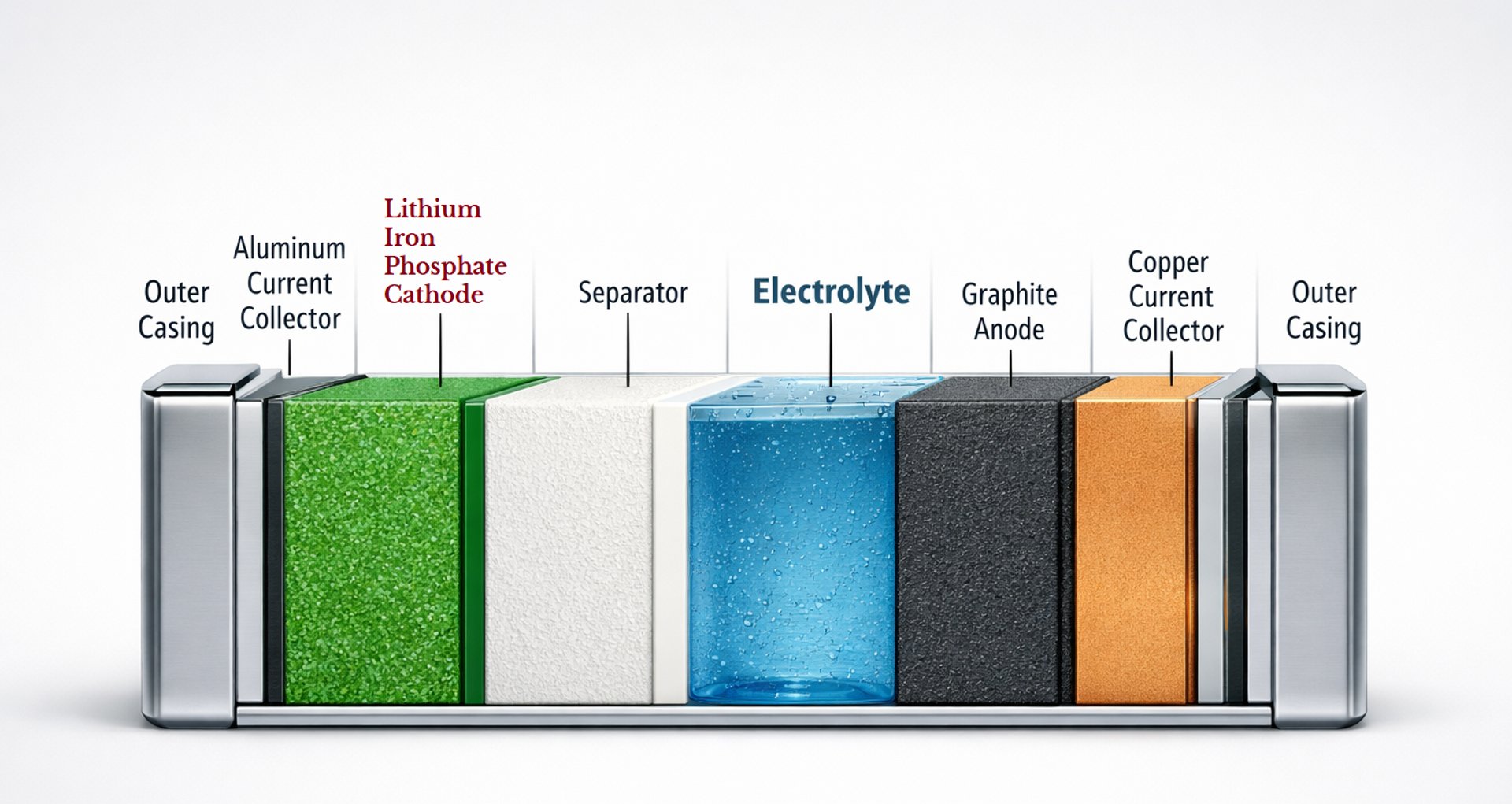
Lithium Iron Phosphate Production Cost Analysis Report 2026
The report offers a comprehensive and data-driven evaluation required for setting up a Lithium Iron Phosphate (LFP) production facility, covering every critical aspect associated with Lithium Iron Phosphate manufacturing cost analysis, plant economics, and industrial-scale production feasibility. It provides in-depth insights into Lithium Iron Phosphate production cost, Lithium Iron Phosphate manufacturing plant cost, capital investment requirements, operating expenditure, and long-term profitability analysis. The study also examines detailed cost components involved in establishing and operating a Lithium Iron Phosphate manufacturing plant, including raw material procurement, utility consumption, process technology, infrastructure setup, machinery requirements, labor costs, packaging, logistics, storage, maintenance, and supply chain considerations.
Lithium Iron Phosphate, commonly known as LFP or LiFePO4, is a highly stable inorganic compound widely used as a cathode material in lithium-ion batteries. Over the last few years, LFP chemistry has emerged as one of the most preferred battery technologies due to its superior thermal stability, longer cycle life, enhanced safety profile, and cost efficiency compared to conventional nickel- and cobalt-based battery chemistries. The material plays a crucial role in the rapidly expanding electric vehicle (EV), renewable energy storage, consumer electronics, telecom backup power, and industrial battery sectors. Its growing importance in clean energy transition and sustainable mobility has significantly increased global demand for Lithium Iron Phosphate production facilities.
The increasing adoption of electric vehicles across major economies has become one of the strongest demand drivers for Lithium Iron Phosphate. Automotive manufacturers are increasingly shifting toward LFP battery technology due to its lower cost, improved safety against thermal runaway, and reduced dependence on expensive raw materials such as cobalt and nickel. In addition to passenger EVs, Lithium Iron Phosphate batteries are extensively utilized in electric buses, commercial vehicles, forklifts, e-bikes, and energy storage systems. Large-scale solar and wind power installations are also accelerating the consumption of LFP batteries because of their long operational life and excellent charging stability.
The report further evaluates the complete industrial manufacturing process of Lithium Iron Phosphate, including raw material preparation, precursor formation, calcination, milling, coating, drying, and quality testing stages. It analyzes the major feedstocks required for LFP production, such as lithium carbonate, iron phosphate, phosphoric acid, iron salts, and carbon coating materials. In addition, the study assesses utility requirements including electricity consumption, water usage, steam generation, compressed air systems, and waste management infrastructure. Since energy consumption and raw material pricing directly influence manufacturing economics, the report includes detailed pricing trends, procurement strategies, and supply chain analysis for key upstream materials.
The growing focus on renewable energy integration and grid-scale battery storage has also boosted industrial procurement of Lithium Iron Phosphate materials. Governments and private investors worldwide are heavily investing in battery manufacturing ecosystems, gigafactories, and localized supply chains to reduce import dependency and strengthen domestic battery production capacity. As a result, demand for Lithium Iron Phosphate cathode materials continues to witness substantial growth across Asia-Pacific, North America, and Europe.
Furthermore, the report provides strategic insights into market trends, future demand outlook, price fluctuations, technological advancements, and competitive benchmarking within the global Lithium Iron Phosphate industry. It also covers factors influencing procurement and sourcing decisions, including transportation costs, geopolitical trade dynamics, environmental regulations, recycling initiatives, and fluctuations in lithium prices. The study enables manufacturers, investors, consultants, procurement specialists, and industry stakeholders to evaluate project viability, optimize production economics, and identify profitable investment opportunities in the rapidly evolving battery materials market.
With the rising global transition toward electrification, carbon neutrality, and renewable energy adoption, Lithium Iron Phosphate has become one of the most critical battery materials for next-generation energy storage applications. Its excellent safety characteristics, cost competitiveness, sustainable chemistry, and long battery lifespan are expected to further strengthen market demand in the coming years. Consequently, establishing an efficient and economically viable Lithium Iron Phosphate manufacturing plant presents significant growth potential for businesses operating in the battery materials and clean energy value chain.
Starts From USD 2499
Raw Materials Required for Lithium Iron Phosphate Production
Contact Us Now!
According to industry-based Lithium Iron Phosphate (LiFePO₄) manufacturing project insights, the primary raw materials required for production include Lithium Carbonate (Li₂CO₃) and Anhydrous Iron Phosphate (FePO₄). These materials form the core chemical inputs responsible for synthesizing high-purity LFP cathode material used in lithium-ion battery applications.
In addition to the primary feedstock, a carbon source (such as glucose, sucrose, or carbon black) is commonly introduced during processing. This improves the electrical conductivity of the final product, enhancing battery performance, rate capability, and cycle stability. Other supporting materials may include phosphoric acid derivatives and iron salts depending on the selected production route and desired material specifications.
The selection and purity of raw materials play a critical role in determining the final product quality, electrochemical efficiency, and overall manufacturing cost structure of Lithium Iron Phosphate.
Lithium Iron Phosphate Production Process
The most widely adopted industrial route for Lithium Iron Phosphate manufacturing is the solid-phase (solid-state reaction) method, known for its scalability, cost efficiency, and stable product output.
Raw Material Preparation and Mixing
The process begins with precise weighing and homogeneous mixing of lithium carbonate (Li₂CO₃) and anhydrous iron phosphate (FePO₄). A carbon precursor is also added at this stage to enhance conductivity in the final cathode material.
High-Temperature Solid-State Reaction
The blended mixture is subjected to controlled calcination in a high-temperature furnace, typically within the range of 600°C to 750°C. During this thermal treatment, lithium ions react with iron phosphate to form the olivine-structured Lithium Iron Phosphate (LiFePO₄).
Grinding and Particle Size Optimization
After sintering, the material is cooled and subjected to milling or jet grinding. This step ensures uniform particle size distribution, which is critical for optimizing electrochemical performance and battery efficiency.
Carbon Coating Process
To improve electronic conductivity, a thin carbon layer is uniformly coated over the LFP particles. This enhances charge transfer kinetics and improves overall battery performance, particularly in high-power applications.
Final Processing and Quality Control
The finished Lithium Iron Phosphate powder undergoes strict quality testing, including phase purity analysis, particle size distribution, tap density measurement, and electrochemical performance evaluation before packaging.
Properties and Industrial Significance of Lithium Iron Phosphate
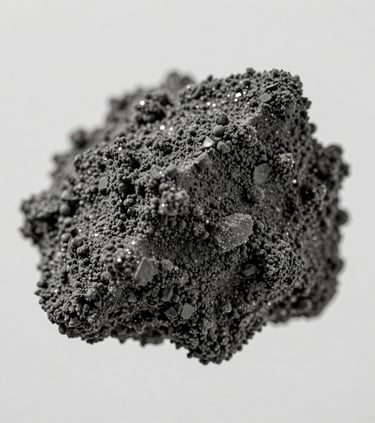
Lithium Iron Phosphate (LiFePO₄) is a high-performance cathode material widely used in lithium-ion battery technology. It appears as a fine grey to black powder with strong thermal and chemical stability.
Key technical properties include:
Molecular weight: 157.76 g/mol
Density: ~1.52 g/cm³
Melting point: >300°C (decomposes before melting)
Crystal structure: Olivine-type, orthorhombic system
LFP is widely recognized for its:
Exceptional thermal stability and safety (low risk of thermal runaway)
Long cycle life and high structural stability
Strong resistance to overcharging and deep discharge
Cost advantage due to reduced dependence on cobalt and nickel
✅ Raw Material Cost
✅ Co-product Credit
✅ Labour/Manpower Cost
✅ Overhead Expenses
✅ Utilities (Electricity, Water, Fuel) Cost
✅ Capital Investment (Machinery, Installation & Land Cost)
✅ Finance Cost
✅ Selling, General & Administrative (SG&A) Cost
✅ Depreciation & Amortization
✅ Tax & Insurance
✅ Packaging Cost
✅ Transportation Cost (if required)
Key Components of Lithium Iron Phosphate Production Cost Analysis Report
To obtain a detailed and comprehensive Lithium Iron Phosphate Production Cost Analysis Report, please fill out the contact form below and connect with our industry analysts. We also offer in-depth Lithium Iron Phosphate Market Research Reports, price trend analysis, and long-term market forecasting reports tailored to your business requirements.
Industrial and Commercial Significance of Lithium Iron Phosphate
Lithium Iron Phosphate is one of the fastest-growing cathode materials in the global battery industry. Its demand is primarily driven by:
Electric vehicles (EVs), especially entry-level and commercial EV segments
Energy storage systems (ESS) for solar and wind power integration
Consumer electronics and industrial backup power systems
Telecom and grid stabilization applications
Its combination of safety, durability, and cost-effectiveness has made it a preferred choice for large-scale energy storage and sustainable mobility solutions.
Management Consulting
© 2026 StratVista Global Consulting. All rights reserved.
Navigating Success with Strategy & Vision
Subscribe to Our Newsletter
Get updated with the latest commodity prices and trends


StratVista
Global
Consulting